1. Introduction – Food as Medicine
In Ayurveda, food is more than fuel — it’s a form of medicine.
Your meals directly influence your dosha balance, digestion (Agni), and long-term health.
Where modern nutrition focuses on calories and macros, Ayurveda emphasizes qualities, tastes, timing, and compatibility.
The Ayurvedic diet is not a one-size-fits-all plan. It’s personalized according to:
- Your dominant dosha (Vata, Pitta, Kapha)
- Your current state of imbalance
- The season and climate
- Your age and activity level
When you align your diet with these principles, you:
- Improve digestion
- Reduce inflammation
- Balance weight naturally
- Enhance mental clarity
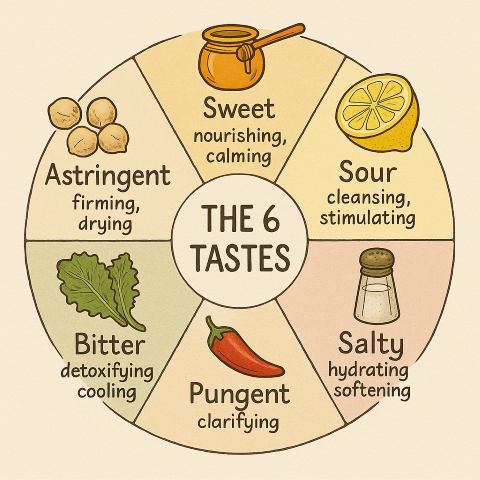
2. The Six Tastes (Shad Rasa)
Every food and herb has one or more of the six tastes, each affecting doshas differently.
| Taste | Sanskrit | Elements | Effect on Doshas |
| Sweet | Madhura | Earth + Water | ↑ Kapha, ↓ Vata/Pitta |
| Sour | Amla | Earth + Fire | ↑ Pitta/Kapha, ↓ Vata |
| Salty | Lavana | Water + Fire | ↑ Pitta/Kapha, ↓ Vata |
| Bitter | Tikta | Air + Ether | ↑ Vata, ↓ Pitta/Kapha |
| Pungent | Katu | Fire + Air | ↑ Vata/Pitta, ↓ Kapha |
| Astringent | Kashaya | Air + Earth | ↑ Vata, ↓ Pitta/Kapha |
Rule:
- Include all 6 tastes daily, but adjust proportions according to your dosha.
- Example: Vata types need more sweet/sour/salty, Pitta needs sweet/bitter/astringent, Kapha needs pungent/bitter/astringent.
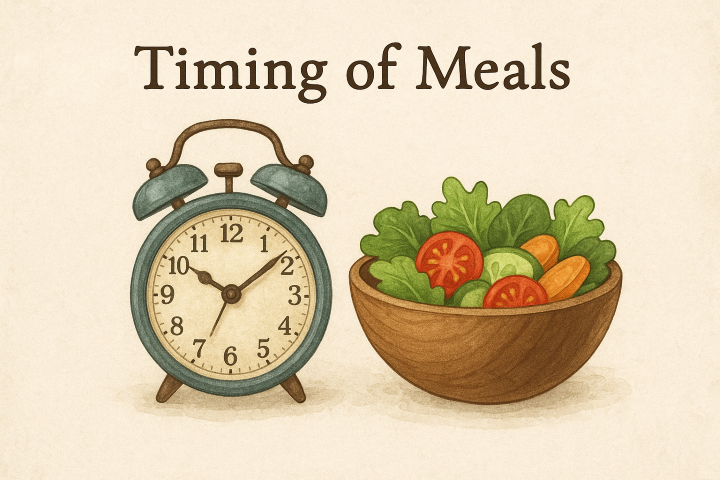
3. Timing of Meals
Ayurveda’s Golden Rule: Eat when your digestive fire (Agni) is strongest.
| Time | Meal | Reason |
| 6–8 AM | Light breakfast (fruit, porridge) | Agni is low after rest |
| 10 AM–2 PM | Largest meal of the day | Agni is strongest at midday |
| 6–7 PM | Light dinner (soups, cooked veggies) | Digestive power declines at night |
Why late-night eating is harmful:
It overloads your digestion, causes toxin (Ama) buildup, and disrupts sleep.
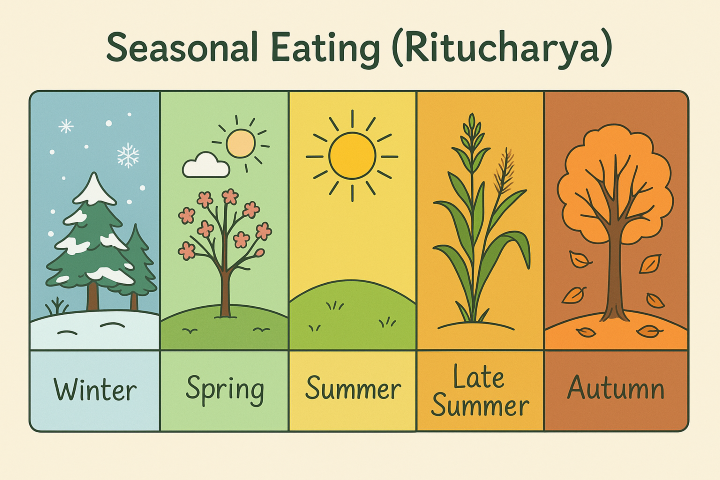
4. Seasonal Eating (Ritucharya)
Eating seasonally keeps doshas in check.
- Spring (Kapha Season): Light, spicy, dry foods (millets, leafy greens, ginger tea)
- Summer (Pitta Season): Cooling foods (cucumber, melons, coconut water)
- Rainy Season (Vata Season): Warm, moist foods (soups, ghee, rice)
- Autumn (Pitta-Vata): Sweet fruits, cooked vegetables, cooling herbs
- Winter (Vata-Kapha): Warm, heavy, oily foods (nuts, root vegetables)
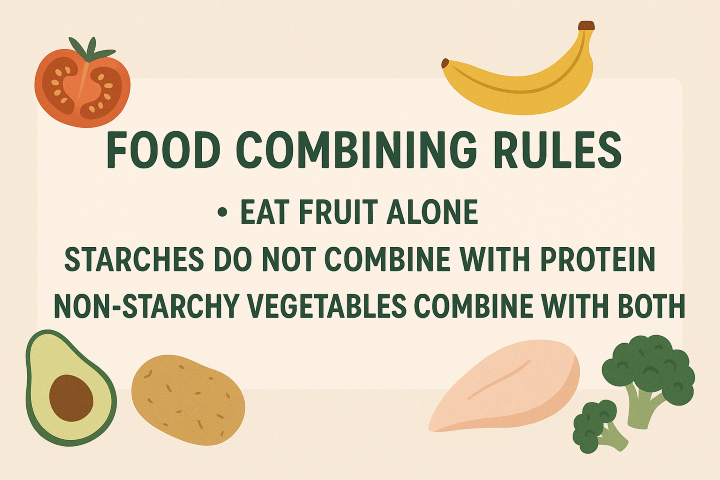
5. Food Combining Rules
Certain combinations cause digestive distress and toxin formation.
| Avoid Combining | Reason |
| Milk + sour fruits | Causes fermentation |
| Milk + fish | Conflicting energies |
| Melons + other foods | Melons digest fastest |
| Yogurt + nightshades (tomato, potato) | Increases Kapha |
6. Agni – The Digestive Fire
Agni is your body’s metabolic power.
Types of Agni:
- Sama Agni – Balanced digestion (ideal)
- Manda Agni – Slow digestion (Kapha tendency)
- Tikshna Agni – Overactive digestion (Pitta tendency)
- Vishama Agni – Irregular digestion (Vata tendency)
Strengthening Agni:
- Sip warm water or herbal teas
- Avoid overeating
- Eat at regular times
- Include digestive spices (ginger, cumin, fennel)
7. Dosha-Specific Diet Guidelines
For Vata Types:
- Favor: Warm, cooked foods, ghee, root vegetables, stews
- Avoid: Cold salads, raw veggies, dry snacks
- Example Breakfast: Oatmeal with cinnamon and dates
For Pitta Types:
- Favor: Cooling fruits, leafy greens, dairy in moderation
- Avoid: Spicy, sour, fried foods
- Example Lunch: Steamed rice with sautéed zucchini and coriander
For Kapha Types:
- Favor: Spicy, light, bitter greens, barley, millets
- Avoid: Heavy dairy, sweets, oily fried foods
- Example Dinner: Lentil soup with ginger and spinach
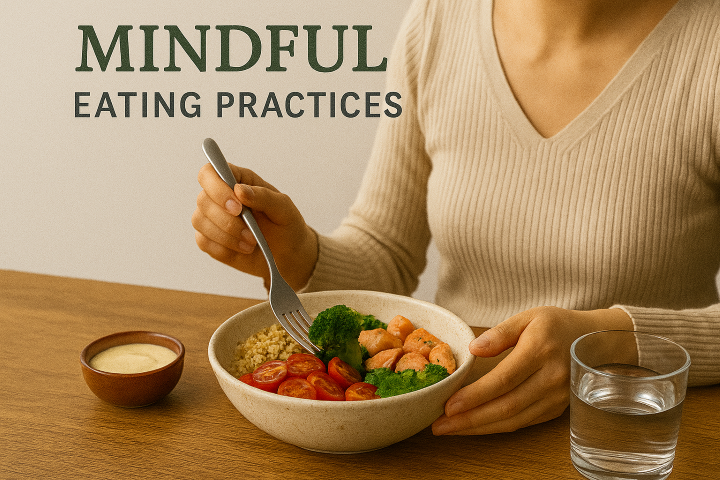
8. Mindful Eating Practices
Ayurveda recommends Mitahara — eating in moderation with mindfulness.
Tips:
- Eat without distractions
- Chew thoroughly
- Stop before feeling full
- Offer gratitude before eating
- Eat in a calm environment
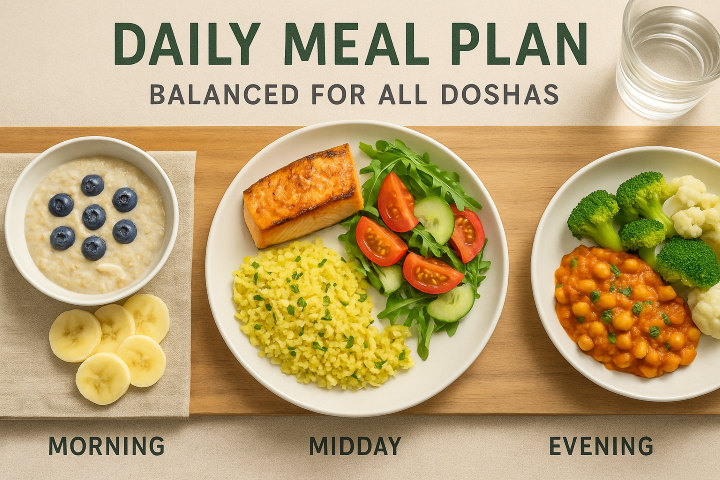
9. Daily Meal Plan Example (Balanced for All Doshas)
Morning (6–8 AM): Warm lemon water, fruit or porridge
Midday (12 PM): Steamed rice, lentils, seasonal veggies, chutney
Evening (6 PM): Vegetable soup, warm herbal tea
10. Common Mistakes in Modern Diets
- Eating incompatible foods together
- Skipping breakfast and overeating at night
- Ignoring seasonal changes
- Drinking cold water with meals
- Eating too fast
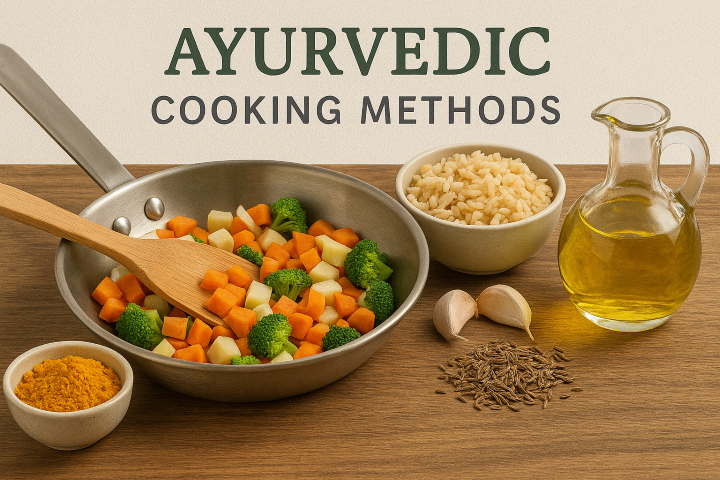
11. Ayurvedic Cooking Methods
- Cook with spices — not just for taste, but for digestion
- Use ghee for nutrient absorption
- Prefer steaming, boiling, light sautéing over deep-frying
12. Detox & Fasting
- Light fasting once a week (fruit or khichdi day)
- Seasonal cleansing with herbal teas & light foods
- Avoid extreme fasting, especially for Vata types
13. Conclusion
An Ayurvedic diet is not a restriction — it’s a way of aligning your eating habits with nature, your body type, and the seasons.
By practicing mindful eating, following the six tastes, and eating at the right times, you’ll naturally move toward better digestion, higher energy, and long-term health.