1. Introduction – Understanding the Ayurvedic Blueprint
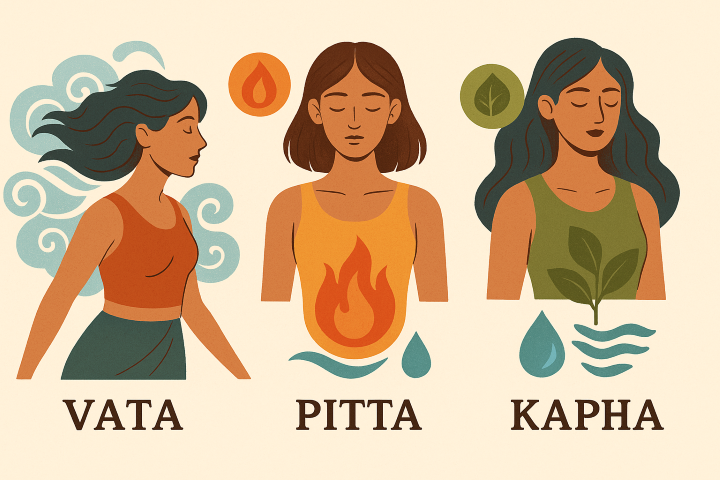
Ayurveda, India’s 5,000-year-old healing system, sees every individual as unique, with their health determined by three vital energies known as doshas — Vata, Pitta, and Kapha.
These energies are derived from the five elements — Air, Ether, Fire, Water, and Earth — and they govern everything from digestion and immunity to mood and creativity.
Your dosha blueprint (Prakriti) is set at birth and remains constant, but your current state (Vikruti) can shift due to diet, lifestyle, environment, and stress.
Balance equals health; imbalance leads to discomfort or disease.
This guide will help you:
- Identify your dominant dosha(s)
- Understand imbalance signs
- Apply diet, lifestyle, and herbal remedies to restore harmony
2. The Three Doshas at a Glance
| Dosha | Elements | Main Qualities | Governs | Mental Traits |
|---|---|---|---|---|
| Vata | Air + Ether | Light, dry, cold, mobile | Movement, circulation, respiration | Creativity, flexibility |
| Pitta | Fire + Water | Hot, sharp, oily, intense | Digestion, metabolism, transformation | Focus, ambition |
| Kapha | Earth + Water | Heavy, cool, stable, moist | Structure, lubrication, immunity | Calm, nurturing |
3. Vata Dosha – The Energy of Movement

Core Nature: Vata controls all motion in the body — from breathing to nerve impulses.
Physical Traits:
- Slim or underweight build
- Cold hands/feet, dry skin
- Quick speech, irregular appetite
Mental/Emotional Traits:
- Creative, adaptable, fast learner
- Can be anxious or scattered under stress
Signs of Balance:
- Flexible body & mind
- Good circulation
- Joyful creativity
Signs of Imbalance:
- Constipation, bloating
- Insomnia, restlessness
- Dry skin, chapped lips
Balancing Vata:
- Foods: Warm, moist, grounding (oats, soups, ghee, root vegetables)
- Lifestyle: Early bedtime, daily oil massage (sesame oil), gentle yoga
- Herbs: Ashwagandha, ginger, fennel tea
4. Pitta Dosha – The Energy of Transformation

Core Nature: Pitta governs digestion, absorption, and body temperature.
Physical Traits:
- Medium build, warm body
- Reddish complexion, strong appetite
Mental/Emotional Traits:
- Focused, determined, confident
- Can be irritable or overly competitive
Signs of Balance:
- Strong digestion, radiant skin
- Leadership skills, decisiveness
Signs of Imbalance:
- Heartburn, acidity
- Skin rashes, inflammation
- Anger, impatience
Balancing Pitta:
- Foods: Cooling, hydrating (melons, cucumbers, leafy greens)
- Lifestyle: Avoid excess heat, practice meditation, stay near water
- Herbs: Aloe vera juice, coriander seeds, turmeric
5. Kapha Dosha – The Energy of Stability

Core Nature: Kapha provides structure, strength, and lubrication.
Physical Traits:
- Solid frame, tendency to gain weight
- Smooth, oily skin, thick hair
Mental/Emotional Traits:
- Calm, compassionate, loyal
- Can be lethargic or resistant to change
Signs of Balance:
- Strong immunity
- Emotional stability
- Endurance
Signs of Imbalance:
- Weight gain, sluggishness
- Congestion, water retention
- Depression, oversleeping
Balancing Kapha:
- Foods: Light, spicy, warm (lentils, leafy greens, ginger tea)
- Lifestyle: Early morning exercise, avoid heavy dinners
- Herbs: Tulsi tea, cinnamon, black pepper
6. Dual & Triple Dosha Types
Many people are a combination of two doshas:
- Vata-Pitta: Creative & driven — needs both grounding & cooling foods
- Pitta-Kapha: Strong & stable — avoid heavy/oily foods, stay cool
- Vata-Kapha: Adaptable & nurturing — light, warm meals are best
A rare few have a Tridoshic constitution — balanced among all three.
7. Seasonal Influence on Doshas
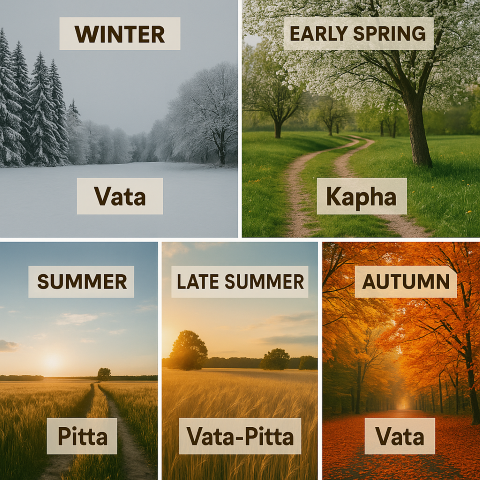
Ayurveda links each season to a dominant dosha:
- Winter/Early Spring: Kapha increases — focus on light, warming foods
- Summer: Pitta increases — cooling foods & hydration
- Late Summer/Autumn: Vata increases — grounding, moist foods
Adjusting diet & habits seasonally prevents imbalance.
8. Dosha-Specific Daily Routines (Dinacharya)
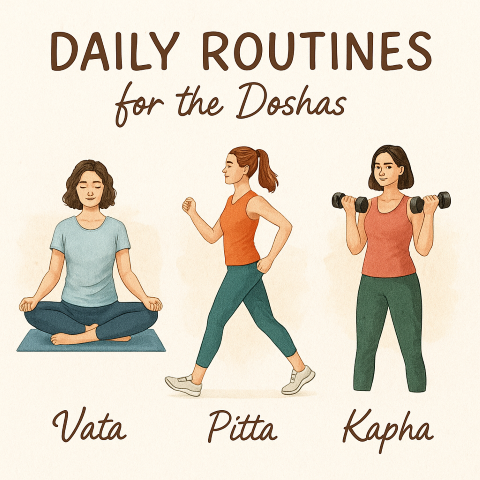
Vata Routine:
- Rise at sunrise, warm oil massage
- Eat at regular times
- Avoid excessive travel or overwork
Pitta Routine:
- Wake before sunrise
- Avoid spicy food late at night
- Practice cooling breath (Sheetali Pranayama)
Kapha Routine:
- Wake by 6 AM, vigorous morning workout
- Avoid heavy evening meals
- Keep mind active with learning
9. Dosha & Diet Charts
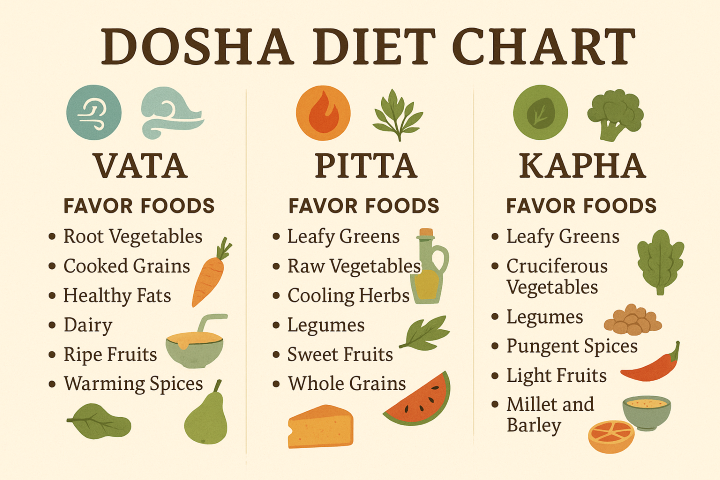
Vata Balancing Foods:
| Favor | Avoid |
|---|---|
| Cooked grains, root veggies | Raw salads, dry snacks |
| Warm herbal teas | Cold drinks |
| Dairy in moderation | Excess beans |
Pitta Balancing Foods:
| Favor | Avoid |
|---|---|
| Sweet fruits, cucumbers | Chilies, sour foods |
| Dairy, coconut | Fried foods |
Kapha Balancing Foods:
| Favor | Avoid |
|---|---|
| Spices, ginger, honey | Dairy, sweets |
| Light soups | Heavy fried foods |
10. Common Myths About Doshas
- Myth: You have only one dosha — Fact: Most people have a combination.
- Myth: Your dosha never changes — Fact: Prakriti is fixed, but Vikruti changes with life.
- Myth: Balancing a dosha means eliminating it — Fact: All doshas are essential.
11. Quick Dosha Quiz
Answer yes/no:
- I often feel cold and have dry skin → Vata
- I get heartburn or feel hot easily → Pitta
- I tend to gain weight easily → Kapha
(Sum up your yes answers to find your dominant dosha.)
12. Herbs for Each Dosha
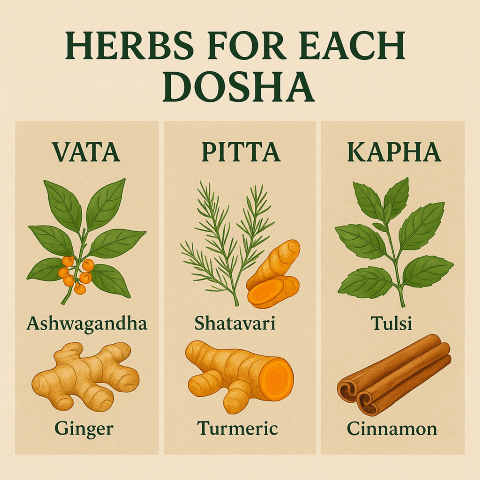
- Vata: Ashwagandha, ginger, fennel
- Pitta: Aloe vera, coriander, neem
- Kapha: Tulsi, cinnamon, black pepper
13. Integrating Dosha Knowledge Into Life

- Start small: Change one meal or morning habit
- Observe: Track energy, mood, digestion
- Adjust: Balance foods, exercise, and rest according to your current dosha state
14. Conclusion
Knowing your dosha is like having your personalized health GPS. When you live according to it, your digestion improves, your mind clears, and your energy becomes stable.