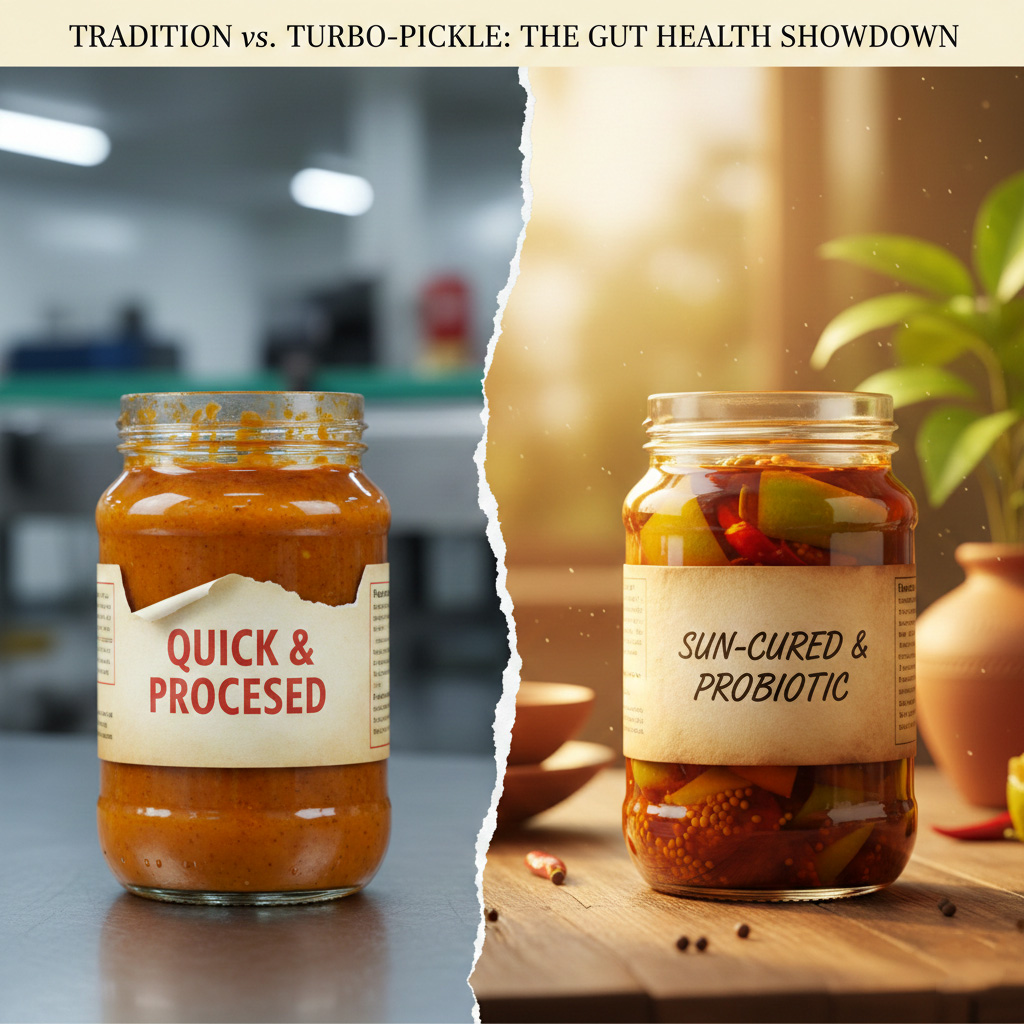
In an era of “instant everything,” the dining table hasn’t been spared. Walk into any modern bistro, and the pickle (achaar) served is likely a “quick fix”—vegetables drowned in heated oil and powdered spices to mimic flavor in a matter of hours. While efficient for commercial kitchens, these shortcuts sacrifice the very soul of the craft: time.
Beyond the Jar: The Lost Art of Natural Fermentation
Authentic Indian pickle-making is not a recipe; it is a ritual. It is a slow-motion transformation where seasonal produce meets the elements. Unlike the aggressive heat used in industrial processing, traditional methods rely on the gentle energy of the sun and the microscopic magic of natural fermentation.

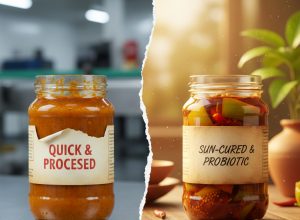
Unlike quick commercial pickles made with heated oil and ground masalas, authentic Indian pickles are naturally cured over weeks using whole spices and traditional sun fermentation.
Whole Spices vs. Ground Powders: The Science of Flavor Release
The secret to a pickle that tastes better six months later lies in the geometry of the spices. Traditionalists eschew fine powders in favor of whole seeds: mustard, fenugreek, nigella, and fennel.

When a spice is ground, its volatile oils oxidize and dissipate quickly. However, when left whole and suspended in cold-pressed oil, these spices act as “flavor capsules.” They release their essence gradually, ensuring the pickle doesn’t just taste “salty” or “hot” but develops a complex, layered profile that evolves on the palate.
| Feature | Quick “Restaurant” Pickles | Authentic Traditional Pickles |
| Oil Base | Refined/Heated Oil | Raw Cold-Pressed Oil |
| Spice Profile | Ground Masalas (Instant) | Whole Spices (Slow Release) |
| Curing Method | Chemical/Heat Acceleration | Natural Sun Curing |
| Shelf Life | 4–6 Weeks | 12+ Months |
| Health Value | Condiment only | Probiotic Superfood |
The Sun as a Natural Lab: How Probiotics are Born
To create a probiotic superfood, you need three things: salt, oil, and the sun. In the traditional method, jars are placed in direct sunlight for weeks. This isn’t just for warmth; it’s a controlled biological process.
- Moisture Extraction: Salt draws out the natural juices of the mango or lime, creating a concentrated brine.
- Protective Sealing: Cold-pressed oil creates an anaerobic environment, keeping “bad” bacteria out.
- Solar Fermentation: The sun’s UV rays and steady heat encourage the growth of Lactobacillus and other beneficial microbes.
This process turns a simple side dish into a functional food. These naturally occurring probiotics are essential for gut health, aiding in protein breakdown and strengthening the digestive “fire” (Agni).
Why Texture and Patience Matter
A common complaint with commercial pickles is that they turn into a mushy paste. Because authentic pickles are never subjected to high heat, the cell walls of the vegetables remain intact. You get a “snap” from a sun-cured carrot or a firm “bite” from a lime rind. This structural integrity is a hallmark of quality.
The Preservation Pillars
How does a jar sit on a shelf for a year without spoiling? It’s a four-point security system:
- Salt acts as the primary preservative.
- Oil seals the ingredients from oxygen.
- Sun eliminates harmful pathogens during the curing phase.
- Time allows the acidity to reach a shelf-stable equilibrium.
Conclusion: A Tradition Worth the Wait
Choosing a traditionally made pickle is an investment in your microbiome and a nod to ancestral wisdom. It is the difference between “fast fashion” food and a handcrafted heirloom. When you taste a pickle that has spent twenty days under the sun, you aren’t just tasting spice—you’re tasting a slow conversation between nature and time.
Experience the taste of time, patience, and tradition.
Explore Authentic Indian Pickles → by Kukhyat Bawarchi.
Frequently Asked Questions
- How are authentic traditional Indian pickles made?
Authentic traditional Indian pickles are made using whole spices, natural oils, salt, and sun curing. The ingredients are slowly fermented over weeks, allowing natural flavors and probiotic benefits to develop without artificial preservatives.
- What is the difference between quick pickles and traditional Indian pickles?
Quick pickles are made using heated oil and ground spices for fast preparation, while traditional Indian pickles use whole spices and natural fermentation over time. This slow process enhances flavor, longevity, and gut-friendly probiotic properties.
- Are traditional Indian pickles probiotic?
Yes, naturally fermented traditional Indian pickles contain beneficial bacteria that support digestion ➜ and gut health when prepared using traditional curing methods without synthetic preservatives.
- How long does authentic Indian pickle take to mature?
Authentic Indian pickles typically take several weeks to mature. The slow curing process allows whole spices to release their flavors gradually, creating rich taste and long shelf life.